

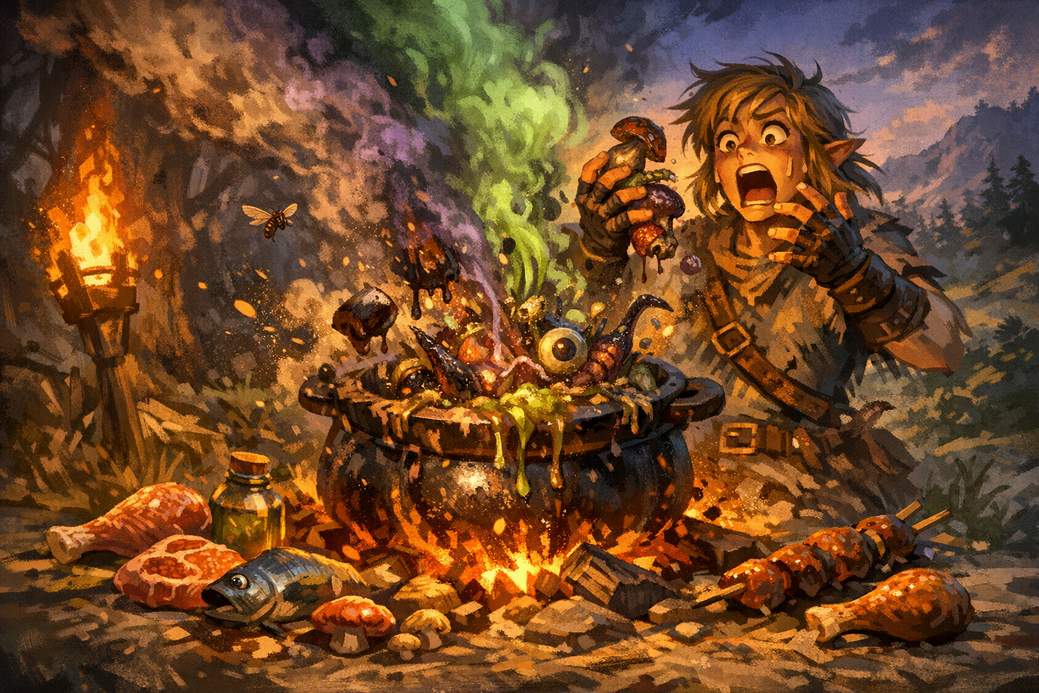
Intro: Why you’ll become Hyrule’s worst chef (and that’s fine)
If you want to stop fainting on every cliff, you’ll need to learn to cook like a slightly drunk camp chef. In Breath of the Wild, cooking isn’t just about filling your tummy — it heals, it buffs, it saves you from hypothermia and electric death, and sometimes it makes you question your life choices (hello, suspicious meal). This guide rounds up the essentials, explains the magical food effects, and gives you a friendly tour through the types of dishes you’ll be throwing into pots while humming an off-key ocarina tune.
Attributes and what they actually do
Foods and elixirs can carry up to eleven different effects depending on what you toss into the pot. Instead of a spreadsheet, imagine each ingredient brings a tiny superpower: some bump up your attack (Strength), others make you tankier (Protector), some give you extra speed (Swift), sneakiness (Stealthy), or bonus hearts (Lively). There are also effects for stamina recovery (Invigorating), cold protection (Spicy), heat protection, fireproofing, and even electricity resistance — mix wisely and you can be a sprinting, stealthy, heavily armored Link with extra hearts and a tiny electric umbrella.
Most ingredients have predictable roles: monster parts usually do weird things; hearty meats and XL/XXL variants raise how much health the dish restores; insects and odd combos can produce suspicious results; and herbs, spices, or special items like vigor honey or Goron spices add unique flavors — I mean, effects.
Basic cooking mechanics (so you don’t set your stew on fire forever)
Combine up to five ingredients in a cooking pot and hit the fire. If at least one cooking-friendly item is included (like meat, fish, mushrooms, fruits, herbs, or monster bits), you’ll usually get a meal. Add critter parts or odd mixes and you might get a potion-like elixir instead. Use salt (Halita), butter, or honey to boost flavor and healing — in-game terms: they often raise the amount of hearts restored. Drop in a Lively ingredient (like a lively salmon) and the meal will also grant extra hearts beyond the normal healing.
Rice dishes — the comfort food of Hyrule
Rice is the backbone of many hearty bowls. Simple rice plus meat becomes Rice with Meat (and upscale versions if the meat is XL or XXL), stuffing you with more hearts the better the cut. Add seafood and you get extravagant results: Salmon Rice and Seafood Rice are the kind of meals that scream “I ate a legendary fish and lived.” Throw in mushrooms, vegetables, or Goron spices and rice pivots from cozy to spicy, sweet, or oddly gourmet depending on what you used. A fried egg on rice? That’s surprisingly filling and makes Link feel like a winner.
Rice balls — snackable, portable, and oddly satisfying
Rice balls are like the on-the-go sandwich of Hyrule. Mix rice with meat for a savory bite, fish or shellfish for a coastal twist, or stuff them with mushrooms and vegetables for a lighter option. Monster essence makes them potent (and weird), while vegetable-filled ones are the kid-friendly choice sold in Kakariko gift shops if such a thing existed.
Skewers and grills — for the carnivore in you
Grilled skewers come in many moods: single-ingredient meat or fish skewers, combos with mushrooms, or luxurious assorted meat skewers if you like variety. A plain grilled meat with some salt is reliable and quick; level up to XL or XXL cuts and you’ll replenish way more hearts. Grilled crab and fish generally need only a pinch of salt to shine — seasoned, seared, and ready for a dramatic close-up.
Steamed and sautéed dishes — fancy rustic energy
Wrapping food in wild leaves and steaming it produces dishes that emphasize natural flavors — think Steamed Meat or Steamed Fish with herbs and roots. Sautés mix plants and proteins for light but flavorful plates; Mountain Sauté and Assorted Mountain Sauté are your salad-to-superfood upgrades depending on how many veggies and herbs you toss in. If you want to glam up mushrooms, glaze them with honey for a sweet, rich bite.
Soups, desserts, and small comforts
There are gentle options too: Vegetable Soup gets its sweetness from slow-simmered carrots or squash and a touch of milk; Buttered Apples are the dessert you didn’t know you needed — warm, sweet, and slathered in goat butter. Omelettes and poached fruits are quick, dependable, and perfect when you don’t feel like wrestling a bogeyman for ingredients.
Suspicious meals and failed experiments — what not to do
If you start throwing insects, random monster parts, or wildly incompatible things together, you’ll sometimes end up with Suspicious Meals or Failed Experiments. They heal very little and taste like regret. Useful only if you’re desperate, experimenting, or trying to punish Link for bad life choices.
Quick tips to become a mediocre gourmet
1) Always carry rice and a couple of staple ingredients like butter, salt (Halita), and a sightly dubious fish — they make surprisingly powerful meals. 2) If you want buffs, look for ingredients labeled Lively, Swift, Spicy, etc., and mix similar effect types to strengthen the outcome. 3) Bigger animal parts = bigger health restoration. 4) Don’t throw bugs and apples together unless your plan is to create a culinary crime scene.
Final bite
Cooking in Breath of the Wild is forgiving, goofy, and one of the most delightful mechanics in the game. Once you start experimenting, you’ll find combinations that boost your playstyle — from stealthy berry-based snacks to protein-packed monster-stomping banquets. So gather ingredients, light your campfire, and remember: a burnt suspicious meal is still a lesson learned.