
Quick TL;DR
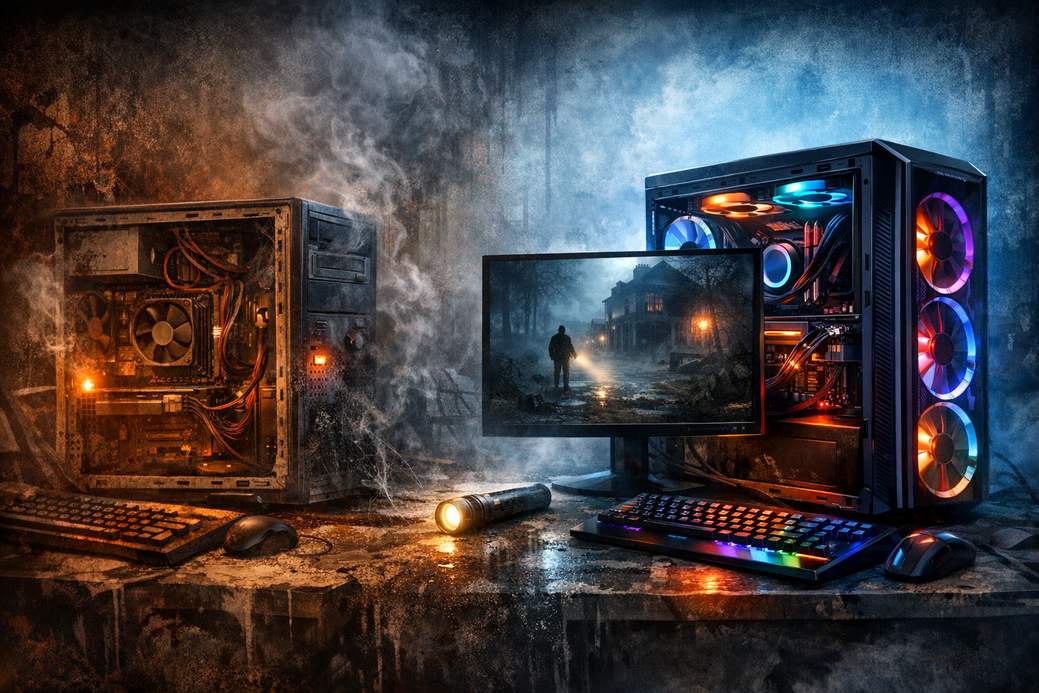
Konami’s new Silent Hill looks classier than your average haunted town, and that comes at a cost — your PC might need a little upgrade love. If you just want to play, you can get by with mid-range hardware. If you want gorgeous visuals and smooth performance, aim higher.
Minimum requirements — what you’ll need to boot the game
OS: Windows 11 x64
CPU: AMD Ryzen 5 3600 or Intel i7-8700K
GPU: NVIDIA GeForce RTX 2060 Super or AMD Radeon RX 6600
RAM: 16 GB
Storage: 75 GB available
DirectX: Version 12
Performance note: Expect to run on low settings at roughly 1080p and 30 fps if you hit these minimums.
Recommended requirements — if you want pretty fog and no potato faces
OS: Windows 11 x64
CPU: AMD Ryzen 7 5700X or Intel i7-9700K
GPU: NVIDIA GeForce RTX 3080 or AMD Radeon RX 7800 XT
RAM: 32 GB
Storage: 75 GB available
DirectX: Version 12
Performance note: With these parts you should hit high settings at 4K around 30 fps — especially if you use upscaling tech like DLSS, FSR, or TSR in balanced mode.
What this means for your PC (in plain spooky English)
This entry is a step up from recent Silent Hill releases in terms of graphical appetite. You don’t need the absolute newest silicon, but older rigs may struggle. If you’re still rocking a GPU from the GTX era or only 8 GB of RAM, expect to either lower settings or start shopping for upgrades.
If your machine already handled the previous games fine, there’s a good chance you’ll be okay — but if you’re chasing 4K shadows, reflections, and all the cinematic creepiness, plan to bump up to the recommended tier.
Final thoughts
All the previews and trailers are doing their job: people are hyped. Whether you’re in it for the scares, the atmosphere, or showing off ray-traced nightmares, make sure your PC matches your ambition. And maybe keep a flashlight handy — both in-game and for your office when you open the case.