
Quick spoiler-free recap
Game Freak just opened a dusty filing cabinet and handed us a pile of early sketches, clips, and internal notes for what would become Pokémon Pokopia. Shigeru Ohmori walks viewers through the prototype in the latest studio video — think rough blocks, quirky textures, and big ideas being tested on a shoestring team.
The game had a different name (and vibe)
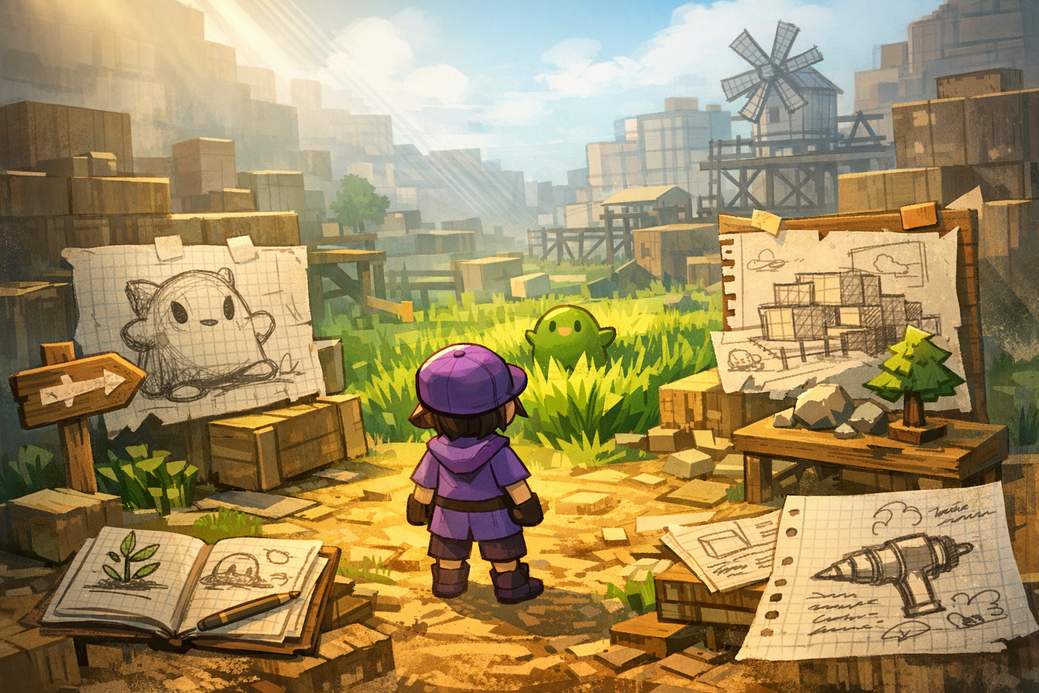
Believe it or not, the prototype didn’t even use the Pokopia name. In the early screenshots it’s listed as “Poko a Pokémon,” featuring a blocky world, wooden signposts, and a hero already rocking a purple outfit. It’s charmingly rough around the edges — the kind of place you can tell is still under heavy construction.
A tiny team, a giant seed of an idea
The project kicked off right after Pokémon Scarlet and Violet wrapped. Initially it was just Ohmori and two programmers experimenting, and the group only grew to five once they started polishing the basic game loop. That small-team energy shows in the prototype: neat, focused experiments rather than polished features.
What the prototype actually proved
The early build laid down the core systems that shaped the final game. The prototype focused on spawning grass in different map areas and letting Pokémon appear in it — a simple mechanic that blossomed into something bigger. There were also fun quirks, like encountering a normal Tangela in the world instead of a Professor Tangrowth character.
Ditto’s origin story (yes, really)
The design docs reveal that the playable character idea was set early: a Ditto transformed into a human. This Ditto can stash tools inside its body and gets plenty of customization — hats, clothes, hair, the full fashion spree. The team spent time debating how wild Ditto’s shape-shifting should be during abilities: should it only change arms, or morph the whole body? Too freeform and you risk breaking the game; too restricted and it loses its playful charm.
How the skill system was sketched out
One internal page breaks the skill design into three neat buckets that still explain a lot about how the game works today: creating new terrain (think vine-like moves making fresh grass), removing terrain (digging holes or smashing rocks), and transforming terrain (encouraging vegetation to sprout). Those simple categories guided many later design choices.
From humble experiments to headline features
It’s funny to watch now: a tiny experiment about growing grass eventually became one of the talking points for hardware and sales chatter around the Switch 2. Game Freak rarely peeks behind the curtain, so this video is a rare look at how a neat idea grows from rough prototype to polish and hype.
Where things stand today
The game remains popular, the devs keep dropping updates (some with little surprises), and expansions like the Coral Basin DLC are out for players to explore. And Game Freak has more behind-the-scenes episodes planned — this prototype peek is labelled part one.
Your turn
What do you think of this throwback tour? Did the goofy prototype vibes win you over, or are you glad the final version cleaned things up? Either way, it’s a fun reminder that even massive games start as tiny experiments.