

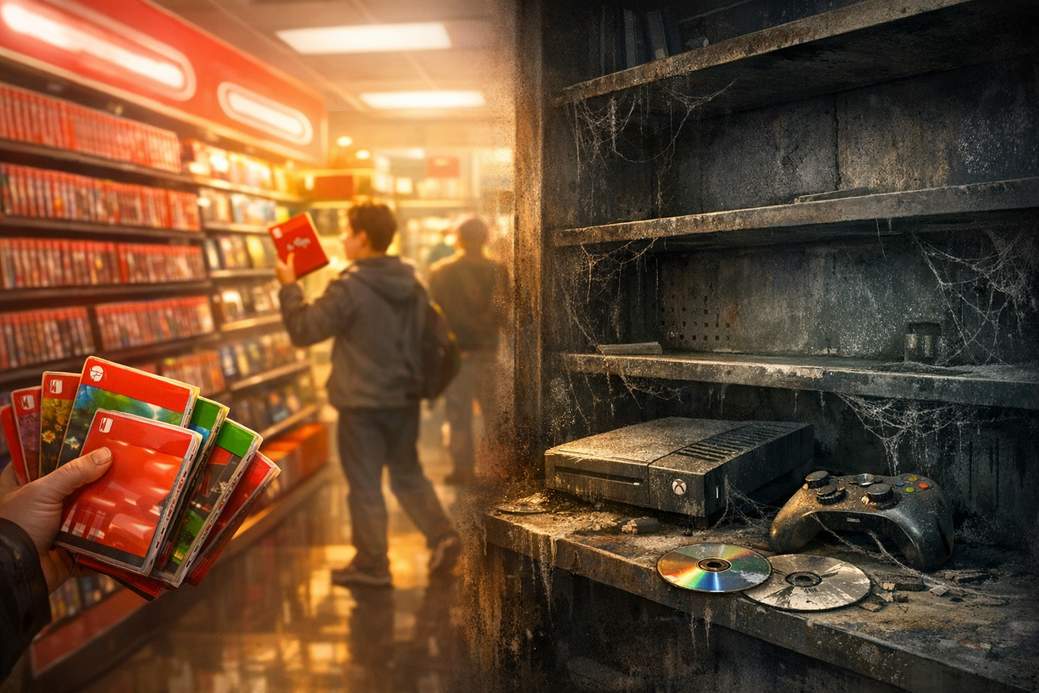
For years physical game sales in the U.S. were on life support, but the format has staged a surprising little comeback — and almost all of the revival money is heading straight to Nintendo. New data from Circana shows that in 2026, a whopping 63% of all physical game sales were for the Nintendo Switch and Switch 2.
Who’s actually buying boxed games?
If you spot someone leaving a store with a game box under their arm, there’s about a two-in-three chance it’s a Nintendo cartridge. To put the market into perspective: Nintendo accounts for roughly 63% of physical sales, Sony’s PlayStation holds about 32%, Xbox is sitting at just over 4%, and PC shows up mostly as the occasional collector’s edition. That tiny Xbox slice helps explain why Microsoft seems to be quietly stepping away from discs and cartridges.
Why cartridges are doing the heavy lifting
The big growth story? Switch 2 cartridges. Analysts — including Mat Piscatella reporting on Circana’s numbers — point to those cartridges as the main engine behind the first year-over-year increase in U.S. physical sales since 2009. It turns out cartridges are doing what discs stopped doing: convincing people to buy a physical copy again.
Consoles, disc drives, and the vanishing disc era
Between Sony saying it will stop making discs by 2028 and the Xbox Series X’s disc drive increasingly feeling like a decorative bit of hardware, optical media is shrinking fast. The physical market has basically consolidated into one big Nintendo fortress — and with the Switch 2 breaking records, that fortress looks like it’ll get bigger.
What this means for gamers and stores
For collectors and players who love the tactile joy of cartridges and boxes, this is good news: more new titles on shelves, more cool physical editions to hunt down. For retailers, though, shelf space is increasingly a Nintendo shrine, and for Xbox fans it means a lot fewer disc-based choices at brick-and-mortar shops. Welcome to the era where physical gaming has a clear favorite — and it’s bright red and green.
Data source: Circana, with figures discussed by analyst Mat Piscatella.