
The leak, short and sweet
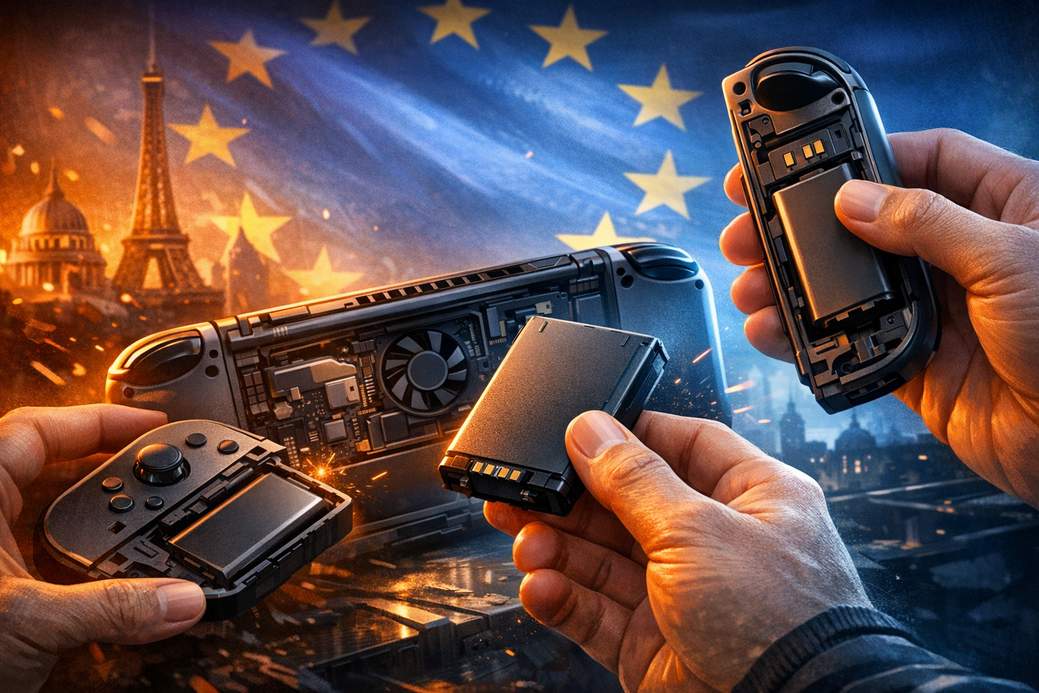
A Japanese report says Nintendo is planning a special version of the Switch 2 for Europe that lets you pull out and swap the battery yourself. Why? A new EU battery law kicks in on February 18, 2027, and it wants batteries to be user-accessible. The tweak would apply to the console and the Joy-Con 2 controllers — at least at first, and likely only in Europe.
What would actually change
Think less factory-sealed gizmo and more gadget with a little battery door. Nintendo would need to rearrange internal parts, rethink cooling and mounts, and provide clear instructions so people can change the lithium-ion pack without special tools. The Joy-Con controllers would also need redesigned internals so their batteries are reachable, too.
Why Europe first?
The short answer: rules. The EU’s new battery requirements force manufacturers to make batteries accessible to consumers. Because that deadline is set, Nintendo might ship a Europe-specific model to comply. That said, if the change proves helpful or politically popular, Nintendo could roll the redesign out to other regions later.
Will this jack up the price?
Maybe. Reports have mentioned memory supply problems and other cost pressures that could push prices up. Maintaining two production lines — one regular model and one EU-compliant model — would be pricier than a single unified design. Nintendo has done removable batteries before with the DS/3DS era, so it’s not uncharted territory, but it isn’t free.
What happens to the original Switch?
The OG Switch would also technically need a redesign to stay legal in the EU after 2027. But it’s nearing retirement: production is tapering and Nintendo’s focus is clearly on the sequel. It might not make financial sense to retool a 2017 console, so Nintendo could quietly stop selling the original in Europe and nudge users toward Switch 2, which supports backward compatibility.
The big picture
This is one of those moments where regional regulations steer hardware design choices. A removable-battery Switch 2 for Europe wouldn’t be just a cosmetic tweak — it would change manufacturing, repair instructions, and maybe prices. We’ll be watching Nintendo’s next moves closely as that February 2027 deadline approaches.